Our group is dedicated to advancing in-situ and operando characterization techniques. Centered around spectroscopic methods, we specialize in probing electrochemical interfaces to decode dynamic interfacial processes in catalysis, energy conversion, and surface science across multiple scales. Below are our core research directions and breakthroughs about characterization techniques:
1. TERS:
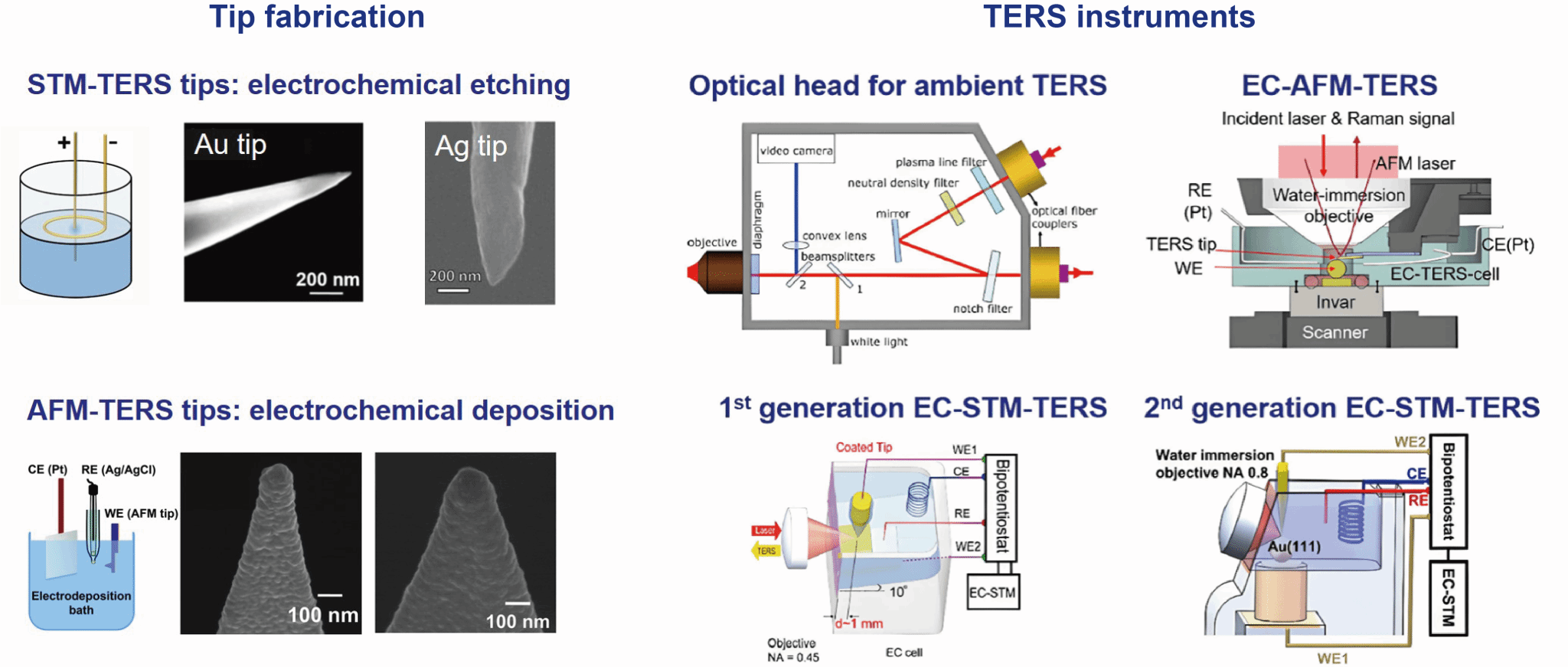
Tip-enhanced Raman spectroscopy (TERS) is a powerful nanospectroscopy technique which combines scanning probe microscopy (SPM) with plasmon-enhanced Raman spectroscopy (PERS). It utilized SPM to obtain topography information while utilized PERS to obtain the chemical information of the sample simultaneously. Development of highly sensitive and easy-to-use TERS instruments working in the air and liquid condition, especially in electrochemical condition (electrochemical tip-enhanced Raman spectroscopy, EC-TERS).
Moreover, we also design and fabricate highly active gold or silver TERS tips (for STM and AFM) via electrochemical etching, electrochemical deposition, physical vacuum deposition and focused-ion-beam (FIB)-based nanofabrication methods.
2. In-situ/Operando Raman
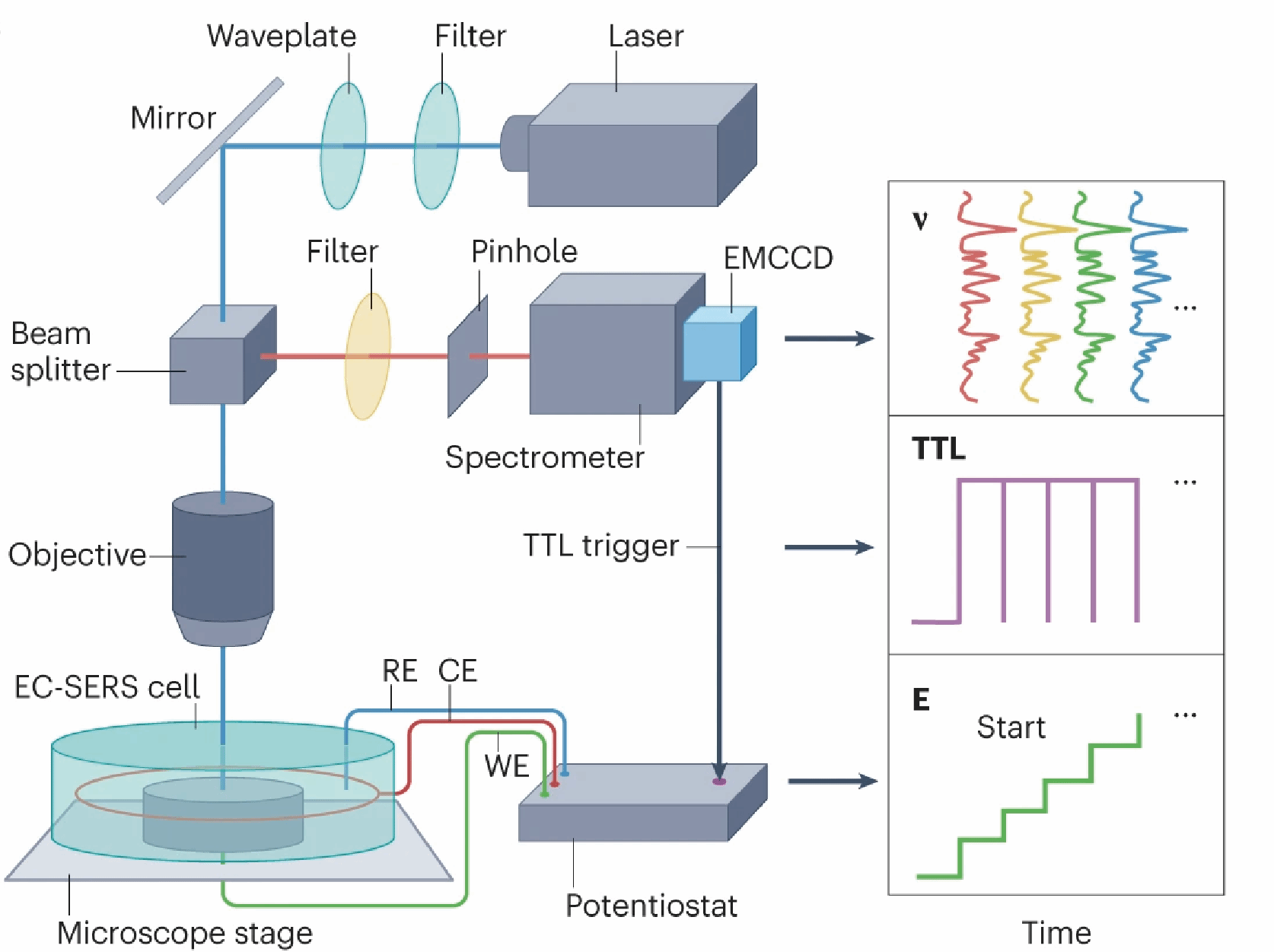
Centered on in situ/operando electrochemical Raman spectroscopy, we focus on fundamentally understanding electrochemical processes at multiple scales. We aim to establish precise structure-activity relationships that bridge the gap between macroscopic electrochemical performance and molecular-level mechanisms. By coupling vibrational fingerprint information derived from Raman spectroscopy with classical electrochemical methods (such as CV, LSV, EIS, and chronoamperometry), we are able to accurately capture key transient intermediates within dynamic electrochemical systems.
Operando/in-situ platforms for electrocatalysis
Addressing the analytical demands of diverse electrocatalytic reactions (such as ORR, CORR, and CO2RR), we are continuously developing adaptable in situ/operando Raman characterization techniques. We have successfully engineered a series of modular Raman cells that integrate with continuous flow cells, rotating disk electrode (RDE) setups, and oxygen free systems. Furthermore, to acquire vibrational fingerprints with high temporal resolution, we have developed transient electrochemical SERS (EC-SERS) to precisely capture the dynamic evolution of reactive intermediates.
Spectroscopic tools for next-generation batteries
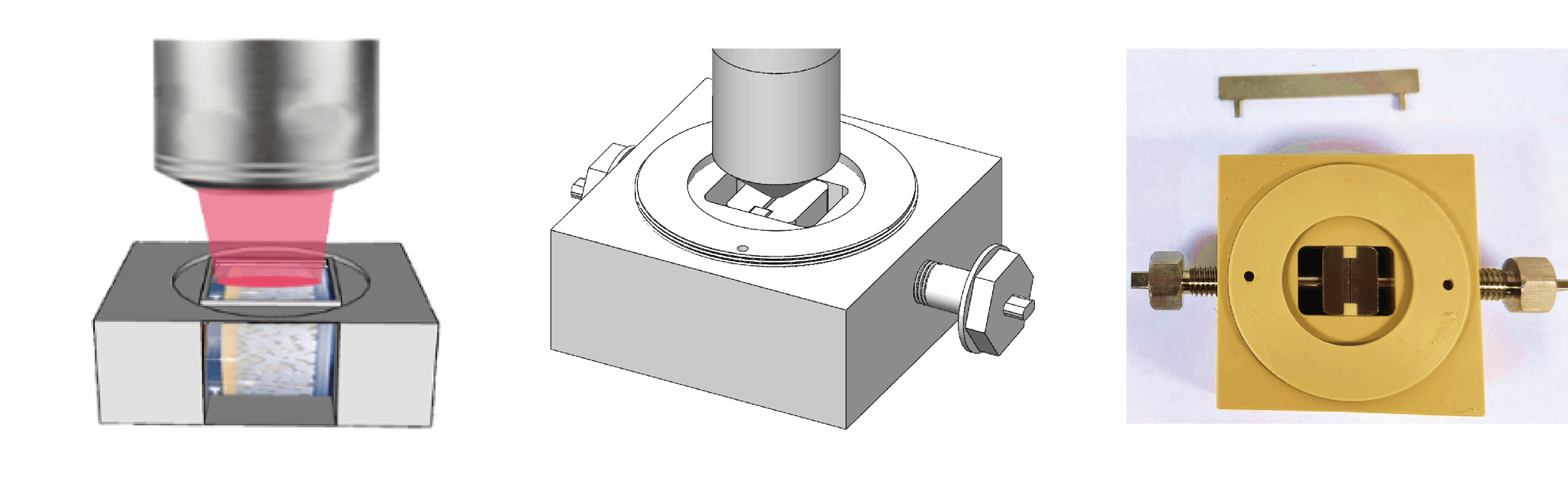
For energy storage systems system, an important field in energy chemistry, we design custom Raman cells compatible with inorganic and polymer solid electrolytes to investigate the solid-solid interfacial evolution. Additionally, to meet the demands of battery characterization, we are developing a new type of line-scan Raman spectrometer for integration with a glovebox.
3. Single particle characterization
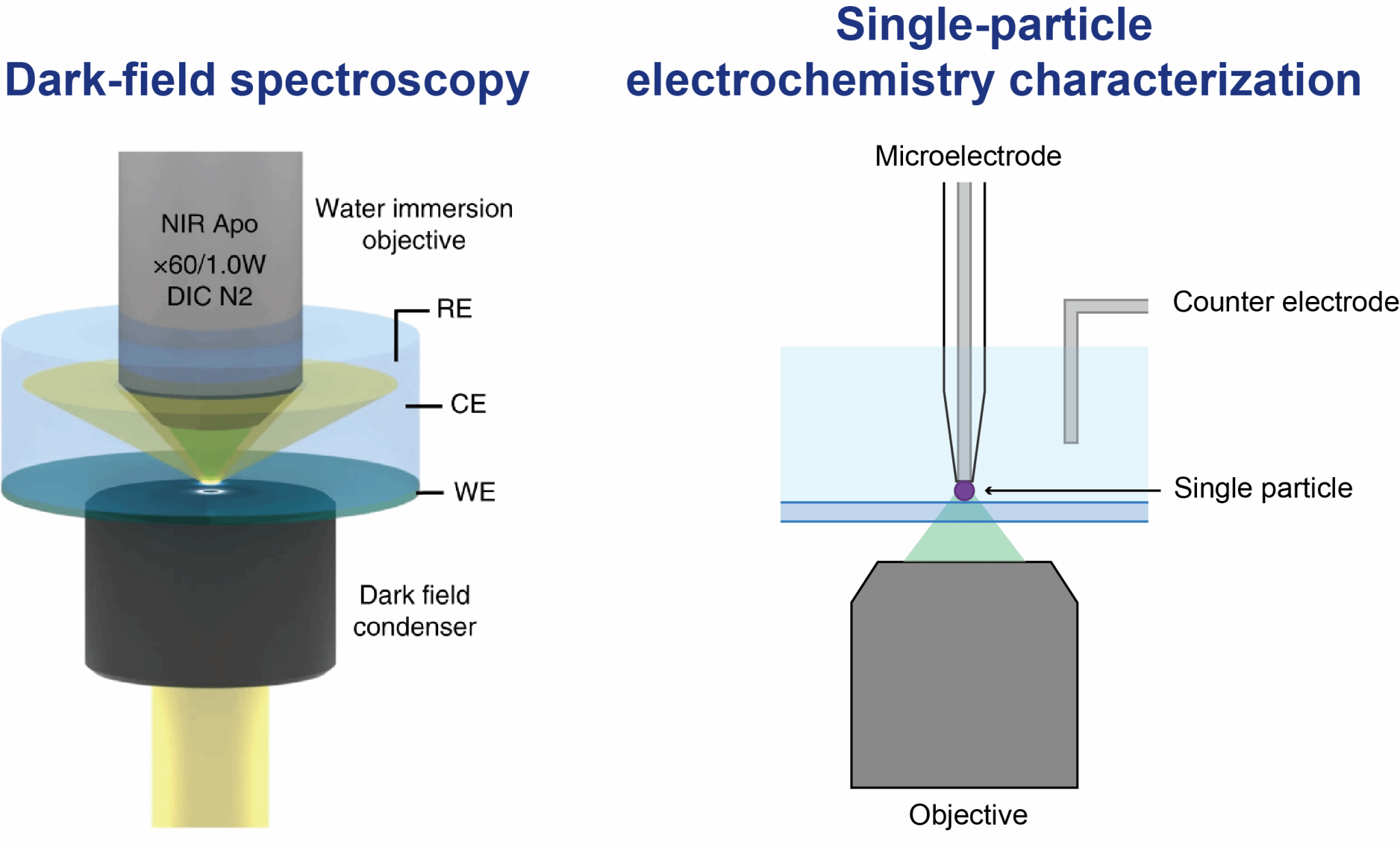
Characterizing electrocatalysts and battery materials at single-particle level is essential for accurately obtaining their intrinsic electrochemical properties. For nanocrystal catalysts, we utilize dark-field spectroscopy to perform in situ characterization of individual metal nanoparticles. Concurrently, for battery materials, we integrate single-particle electrochemistry characterization with Raman spectroscopy to realize the intrinsic structure-activity relationship of individual active particles in commercial batteries.
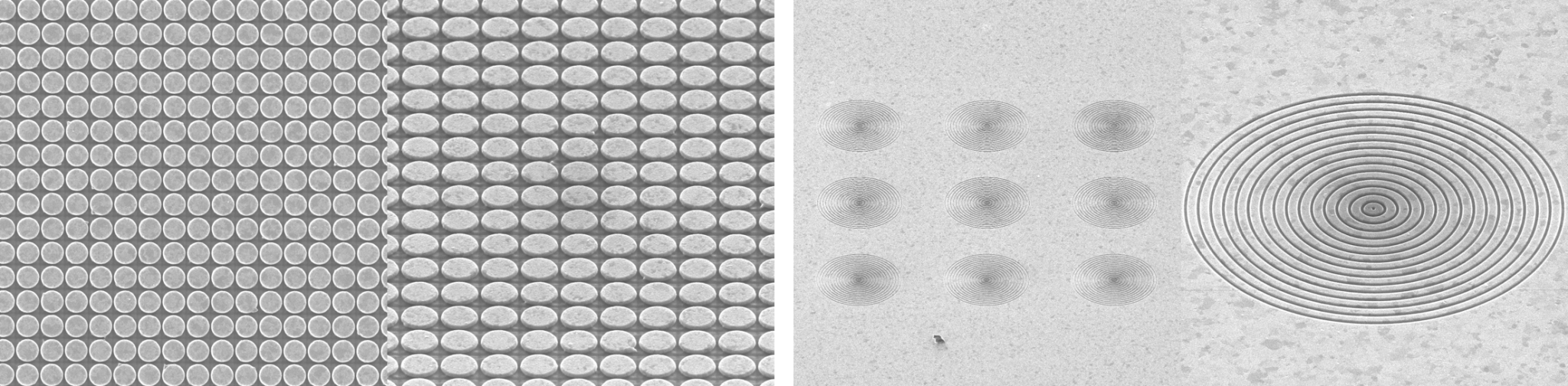
In addition, elucidating the fundamental origins of SERS enhancement can reveal the chemical and physical properties of metallic nanostructure, paving the way for potential application in controlled chemistry and energy. We approach this through combining both theoretical calculation (e.g., DDA, FDTD, FEM) and experimental investigations. Guided by these the fundamental understanding, we precisely fabricate high-performance SERS substrates for SERS applications in various fields. We aim to solve this issue mainly via focused ion beam (FIB) and holographic lithography.